
Tonga Humpback Intentional Immersion Pre-Departure Guide
- 8 Days, 7 Nights
- Start/ End Point: Haʻapai Islands, Tonga
Ahoy, friend!
You’ve just booked something extraordinary, and we’re so excited to have you on this life-changing journey with us. Soon you’ll be stepping onto a tiny, quiet island in the Haʻapai chain… The winner of our mission to find the perfect spot to run this expedition.
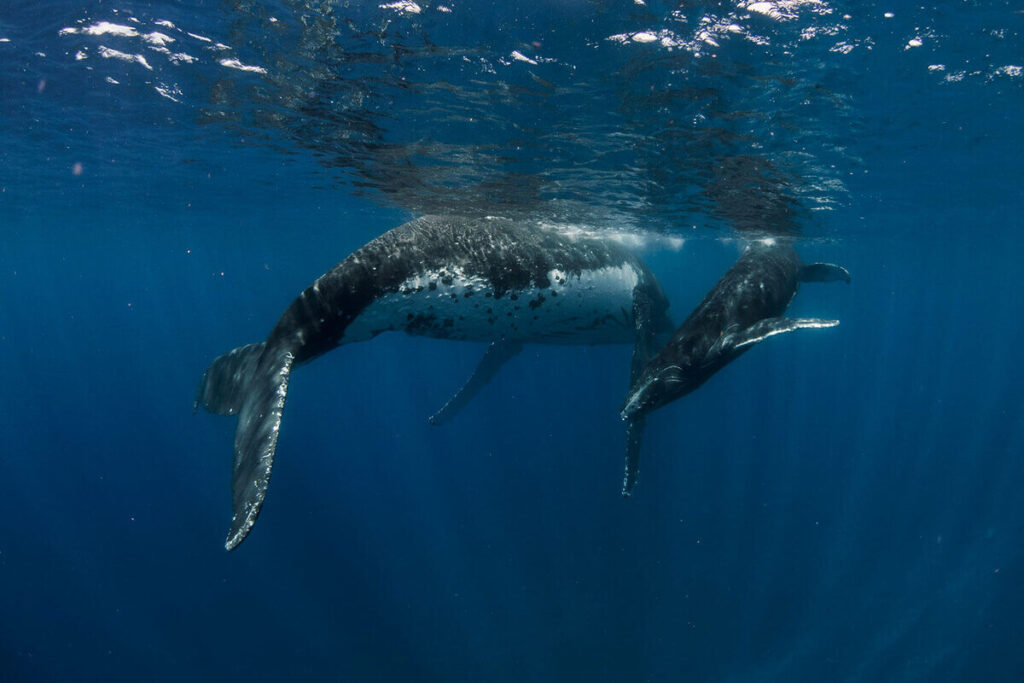
Every year, humpbacks migrate here to give birth and rest in warm, calm waters, and because so few boats operate in this region, many encounters happen with no one else around. Our expert guides read the whales’ behaviour with care, creating those rare, intimate moments where curious juveniles rise from the deep or mothers rest with their calves on the seafloor.
Dolphins, manta rays, and the occasional false killer whale sometimes join the show, too. Evenings bring sunset swims, bonfires, shared meals, and that magical feeling of being completely off-grid. You’ve chosen an adventure that stays with you long after you’ve left, and we can’t wait to share it with you.
We can’t wait to share it with you.
Getting ready to experience Tonga
Over the next few months, we will be sending you a few forms and documents to return in order to collect necessary information from you. Please do your best to fill in and return these as soon as you can.
Visa Arrangements - General Info
Most travellers can enter Tonga easily, with many nationalities receiving a free 30-day visa on arrival. You’ll need a passport valid for at least six months beyond your arrival date, proof of onward travel, and evidence of sufficient funds.
Tonga’s visa‑waiver list includes the UK, EU countries, Australia, New Zealand, Canada, the US, and many others, meaning no advance application is required for most visitors. If your nationality isn’t on the waiver list, you’ll need to apply for an entry permit before travelling. Extensions beyond 30 days are possible through Tonga Immigration once you’re there.
You can check your specific nationality requirements on the Tongan Immigration Website.
How to get there
Reaching remote Ha’apai is part of the adventure!
Getting there is part of the journey. Most guests from the USA fly to Tongatapu (TBU) via Fiji, though routing through Auckland is another popular option. From Tongatapu, a scenic 50-minute domestic flight carries you onward to the Ha’apai Islands, and we take care of booking this for you.
Domestic flights only run once a day here, and timing can shift, so we work closely with our partners at Lulutai Airlines to make sure the whole group travels together and every transfer runs smoothly. Since that single daily flight rarely lines up neatly with international arrivals, we recommend spending one night in Tongatapu before heading onward, unless your flight happens to land before 9:00 AM.
Once you touch down in Ha’apai, a local driver will meet you and take you to the wharf, where a final 30-minute boat ride carries you across the water to Uoleva Island: your home for the week ahead.
Airport to town transfer:
In Tongatapu, you can catch a taxi directly outside the international or domestic airport. Trips into town typically take around 45 minutes and cost about TOP 70. You can request to be dropped off at a hotel, Airbnb, or other location in town.
Accomodation in Tongatapu
Most guests will need to spend one night in Tongatapu before the expedition and possibly after as well, depending on how your international flights align with the domestic flights. Below are our recommended accommodation options:
- Seaview Lodge: Located on the waterfront in town with an excellent restaurant.
- Tanoa International Dateline Hotel: In town, pool and restaurant
- Little Italy Hotel: Known for great food and comfortable rooms (min-two night stay)
- The Waterfront Lodge: A cozy, boutique feel right across from the harbor.
- The Kongakava: A great locally run hotel on Vuna Road
Accommodation for the expedition
Each of the rooms sits on a raised wooden platform, with a spacious tent, an ensuite bathroom with a solar-powered shower, a comfortable bed, and a private balcony looking out over the ocean. It’s simple, comfortable, and close to nature, powered by rainwater and solar energy.
Beyond your tent, the sanctuary opens onto shared spaces built for connection: a beachside dining and gathering area with a ceremonial fire circle, and a 10-meter acoustic dome tucked in the forest, used for yoga, meditation, and sound healing with crystal singing bowls and drums.
Communal life centres around our large beachside social and dining space, which faces the ocean and includes a long ceremonial dining table, sofas, floor cushions, a small library, and gathering areas.
Mornings often begin with yoga or breathwork, evenings wind down by the fire, and many guests fall asleep to the sound of the sea, sometimes joined by whale song drifting in from the water.
There are no roads, shops, restaurants, or markets on the island. Life here is shaped by tides, weather, daylight, and the seasonal presence of whales.
Sustainability & Off-Grid Systems
The sanctuary runs entirely off-grid, powered by rainwater collection for drinking and showers, solar power with battery storage, and careful management of water and electricity throughout. Charging stations for phones, cameras, and laptops are available in the main social area, and each room has lighting and shower access, though we ask guests to use resources mindfully as part of living respectfully on a remote island.
Our partners here are developing a small, hands-on food and garden space guided by permaculture principles. Guests are welcome to visit, nourish, and gently care for the garden as part of daily life on the island. This is offered as an invitation rather than an expectation, supporting a simple relationship with food, land, and seasonal rhythms.
The island also maintains a strict no single-use plastic policy, so please pack accordingly.
Island Wildlife & Natural Encounters
The island is home to gentle, diverse wildlife that guests naturally cross paths with throughout their stay. Common sightings include fruit bats, seabirds and shore birds, hermit crabs, reef fish, and the usual insects of a tropical island environment. You’ll also spot domesticated pigs, a common sight across Tonga.
There’s good news for anyone nervous about creepy crawlies: there are no venomous animals or snakes on the island, and the local spiders and insects are all non-venomous too.
At low tide, the lagoon and reef flats open up into tide pools full of small fish, shells, crabs, and other marine life, well worth a wander. As with everywhere on the island, we ask guests to move respectfully and attentively through this environment.
Food in Tonga
The kitchen is fully staffed by a lead chef along with additional cooks and kitchen support, so meals are prepared fresh on site rather than pre-packaged or shipped in. The food philosophy centres on fresh, nourishing ingredients, with an emphasis on organic and health-focused products wherever possible. Vegetarian and vegan options are always available, and gluten-free needs are accommodated. Eggs are organic and free-range, sourced locally, and fish and seafood come straight from local fishermen, so what’s on your plate reflects what’s actually available on the island that day.
Meals follow a simple daily rhythm: breakfast before 9am, a packed lunch taken out on the boat (often with stops on nearby islands), and dinner served at 6pm. Dining happens in the main social space on the beach, built around a large communal ceremonial table, with sofas and floor cushions nearby for a relaxed gathering atmosphere. There’s also a bar area offering specialty barista coffee, smoothies, and both alcoholic and non-alcoholic drinks, designed more as a place for connection and rest than nightlife.
If you’d like, guests can also spend time in a small hands-on garden space guided by permaculture principles, an invitation rather than an obligation, for anyone who wants a closer relationship with where the food comes from.
Dietary requirements
We take food seriously and inclusively. All meals on the trip are included and prepared by our private chef, and we can accommodate a wide range of dietary requirements and preferences within the limitations of the island’s food supply. Whether you’re vegetarian, gluten-free, dairy-free, or have allergies, we’ve got you covered. Just let us know in advance, and we’ll make sure every meal is both safe and satisfying.
We do, however, recommend you bring snacks if you have specific dietary requirements.
This adventure tour requires a lot of energy output each day, and a big part of our job is keeping everybody nourished, happy, and energized.
Dress and Culture in Tonga
Tonga is warm, welcoming, and deeply traditional, so dressing with respect goes a long way. On the outer islands where we are staying, swimwear and bikinis are completely fine around the beach and accommodation. In Nuku’alofa or any populated village, modest clothing is expected – skirts or shorts below the knee, covered shoulders (men and women), and a general awareness that Tongans value conservative dress, especially around churches or during cultural events. You’ll see locals wearing ta’ovala (woven mats) for formal occasions, and while visitors aren’t expected to, showing respect through modest clothing is appreciated.
Sundays:
Sundays are a day of rest in Tonga, where no one is allowed to operate boat charters. This will give us the chance to change up the pace a little and visit a nearby Tongan village of around one hundred residents.
We’ll have the chance to chat with the locals, experience traditional weaving demonstrations, learn about island life, and visit small family farms, some of which supply the food we eat! There will also be plenty of time on Sunday for yoga, Island trails, stand-up paddleboarding, kayaking, shore snorkeling, relaxing, and games.
Your Whale Encounter: What to Expect
Every swim is led by a certified guide, easily spotted by their orange float, who is legally responsible for the encounter and reads the whales’ behaviour to keep everyone safe. Stay within 3 meters of your guide at all times, and remain at least 5 meters from the whales, sometimes further, depending on how the guide reads their mood. Always approach whales from the side, never the tail or head, stay on the surface (no duck diving or free diving), and keep things calm and quiet: no splashing, no flash photography.
Bring your own mask, snorkel, fins, and wetsuit if you can. Limited spares are available, but weight belts are only issued to guests with prior training, and any lost or damaged gear incurs a replacement fee. If you’re a photographer, chat with your guide and the skipper before entering the water so expectations are clear, and stay with the group throughout.
On the boat, the captain has final say, so please follow their directions. You’ll need to be a confident open-ocean swimmer, comfortable with current or choppy conditions, and able to climb back up the ladder unassisted. If you’re prone to seasickness, bring your medication, let us know in advance, and take it before departure since we can be up to an hour from shore.
One important rule: whales often pass close to the resort, but it’s illegal to approach one by kayak, snorkel, or swimming without a licensed Fanifo Lofa guide. If you spot a whale on your own, please admire it from a distance and never approach.
Staying safe on this trip
You may have guessed, but this adventure tour carries a certain amount of risk since we are heading out on the sea. This is not your average holiday!
For the best experience, you should be confident in the water; however, if you want to view the whales from the boat or swim with a life jacket, this is possible. If you don’t feel confident, just be sure to let us know beforehand.
Guest Safety is Elsewheria’s #1 priority, and our experienced ground team does everything within their power to set our group up for a safe adventure. The name of the game is security and safety first, and injury prevention. We take it very seriously and will give a briefing when you arrive.
Travel insurance for Tonga
You cannot come on this trip unless you buy travel insurance. You will need to prove you have insurance by providing a photocopy of your policy. You also need to sign a waiver (mentioned previously), releasing the guides, Elsewheria, and our partners in Tonga of any liability.
We do strongly recommend purchasing full coverage, comprehensive travel insurance that includes coverage for flight delays and cancellations. Domestic flights in Tonga can occasionally be unpredictable, and while we will always do our best to assist you in the event of any disruptions, Elsewheria cannot be held responsible for delays or cancellations. Having the appropriate coverage ensures you are protected and can travel with peace of mind.
Medical Considerations Before Travelling to Tonga
Before heading to any overseas country, you should always check out your government’s health advice. Below, you can find links to various government websites that outline this for travel to Tonga:
Most importantly, consult with a quality health care professional or travel doctors before departure to be sure you’ve got all the correct vaccinations, etc.
What healthcare is available on the island?
There is a hospital in Nuku’alofa and one in Ha’apai. The Ha’apai hospital is very basic, so plan accordingly if you have specific medical needs.
Money in Tonga
When you land in Nuku’alofa, there is an ATM where you can withdraw local currency (TOP – Tongan Pa’anga). Some places accept cards, but cash is still king in Tonga, so it’s best to carry some for purchases.
We highly recommend using Wise to minimise costs in ATM fees and currency conversion while travelling.
How much should you bring?
To cover tipping, alcohol souvenirs and other extras, we recommend bringing an additional $500.
Please see the note on tipping in the next section of this document. You can always change the TOP back to your preferred currency at the end of the trip, if need be.
Tipping Staff and Guides
The Elsewheria team goes above and beyond for guests before, during, and after the trip to make sure that everyone has the best possible experience imaginable.
We tip our boat captains and accommodation partners on your behalf, so you don’t need to worry about that, although if any of the local staff go above and beyond and you really want to tip them, feel free to do so!
Tips for Elsewheria guides are optional and at your discretion
SIM Cards and Internet Access in Tonga
There are a couple of local carriers in Tonga, including Digicel and ucall. Most places have mobile coverage, though it can be patchy in very remote areas. eSIMs are now an option for some phones, and many modern phones also work on roaming.
On the island, mobile internet speed may be slower, and coverage can be limited, so we have Starlink internet, which is fast and reliable.
Weather Conditions in Tonga in September
September is one of the best months to be in Tonga. The weather is warm, dry, and settled, with daytime temperatures usually sitting around the mid‑20s °C and cooler, comfortable evenings.
The trade winds ease off compared to earlier in the season, creating calmer seas and excellent visibility in the water. It’s still technically the tail end of the dry season, so rain is minimal, humidity is moderate, and conditions are generally perfect for long days on the ocean with the whales!
What to pack
Don’t worry, team, we’ve got you covered with a FULL packing list for Tonga. From underwear to suncream, we’ve covered it all.
Note on Laundry: Although you might get the opportunity to do laundry, it is not guaranteed. Please pack assuming you will not have laundry available.
Meet Your Guides
We have a team of incredible guides who lead our expeditions. We will let you know who your specific guide is closer to the time. But to get to know your potential hosts, you can check out our Meet the Team page.
Terms and Conditions
Please find our full terms and conditions here.
Any questions?
Please check out our FAQs on the tour itinerary page, or email us at hello@elsewheria.com. Again, we are very excited to get to meet you in person in Tonga soon!